Restoring Motor End Bells with Brush Plating

wilson.wang • November 16, 2026

A Repair Instead of a Replacement


An electric motor's end bell (also called an end shield) holds the bearing that supports the rotor. When the bearing bore inside it is corroded, pitted, or worn oversize, the bearing no longer sits firmly. The result is vibration, repeat bearing failures, and a motor that cannot safely return to service.


For large motors, replacing an end bell can mean a long wait and a high cost. This article shows how worn end bell bores can be restored to their original dimensions using Brush Plating, drawing on a repair we carried out in the past for a motor manufacturer.


Why End Bell Bores Fail

The bearing bore is a precision surface. It has to hold the bearing's outer ring tightly, within a very small tolerance. Over time it can be damaged by:

  • Corrosion and pitting. Moisture, humid or marine environments, and long storage can attack the bore surface.
  • Fretting and creep. If the fit loosens, the bearing ring moves slightly against the bore, wearing the metal away and making the fit looser still.
  • Bearing failure. A seized or broken-up bearing can score or enlarge the bore very quickly.
  • Handling and removal damage. Pullers, hammering, or uneven heating can leave marks.


Even a small loss of material matters. Wear measured in hundredths of a millimeter can be enough to cause a loose fit.


The Challenge

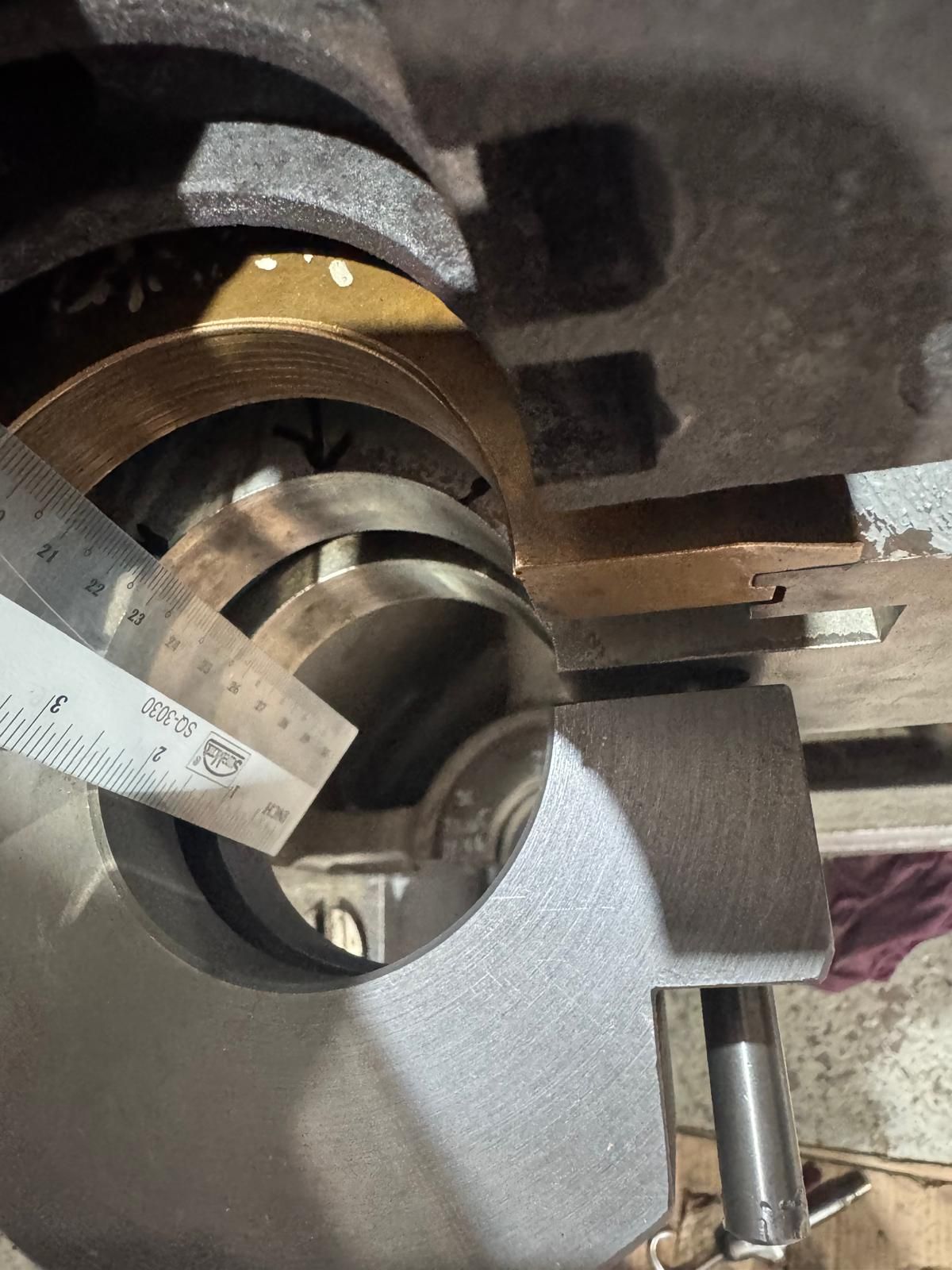
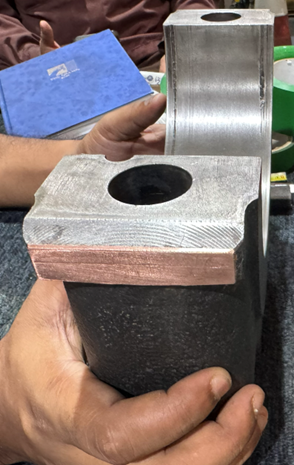
The end bell in this project was a large, heavy casting with a central bearing bore that no longer met its specified size because of corrosion and pitting. Replacing the end bell was possible, but it would have meant added cost and a longer delay. The goal was to rebuild the bore back to its required dimension, and to do so without heat that could distort the casting.


The Repair Process

1. Assess and measure. The bore was measured to establish how much material was missing and how far it was from the required size. The target dimension and the amount of build-up needed were marked directly on the part, so everyone working on it could see them.


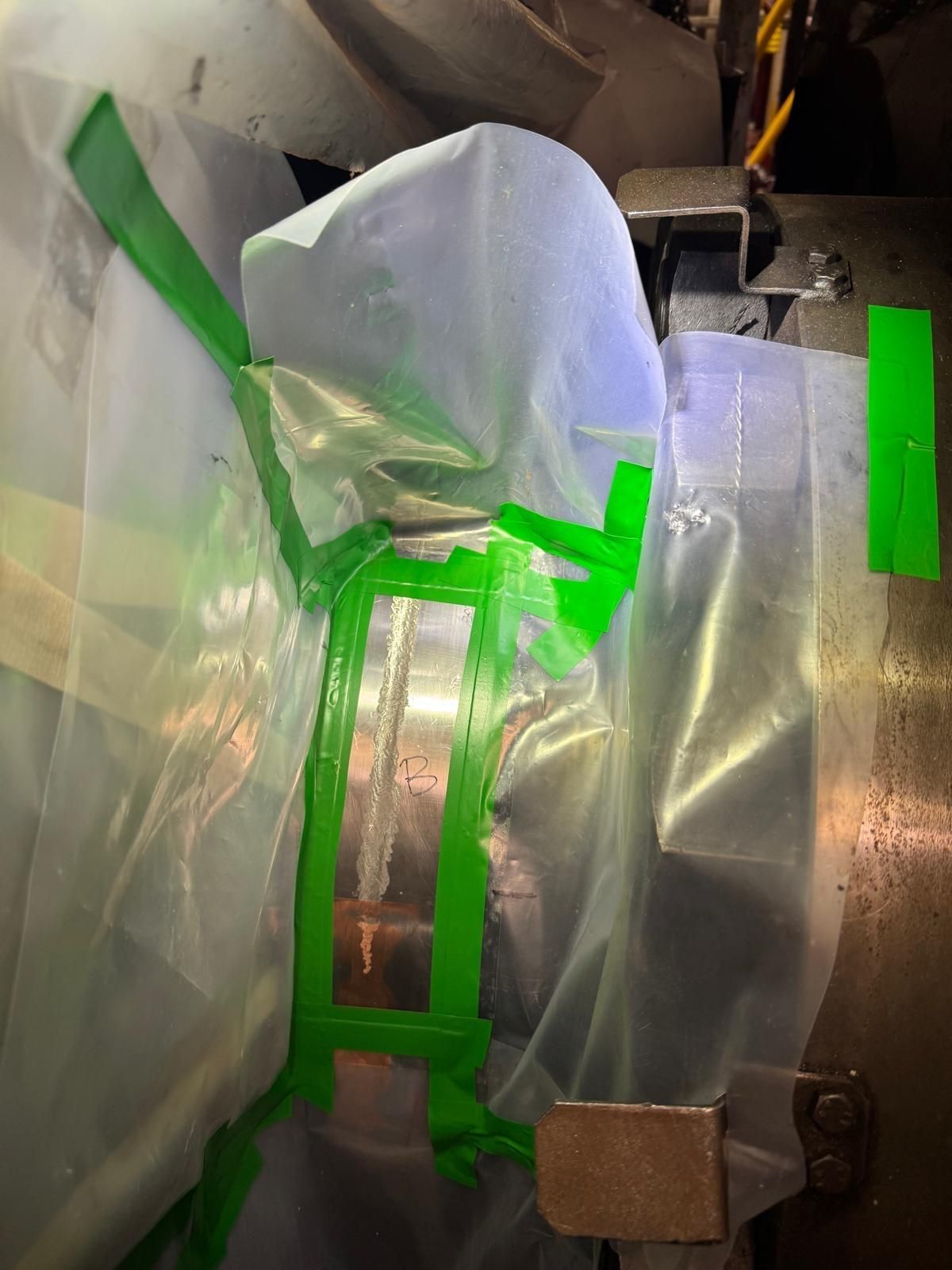
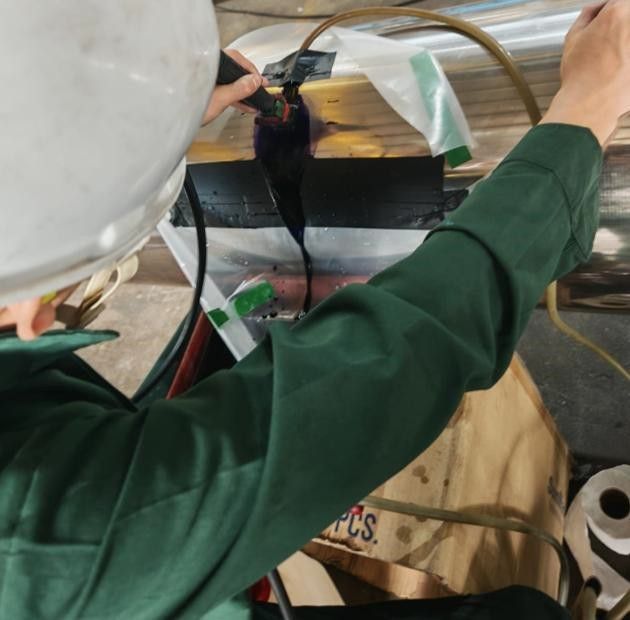
2. Mask and protect. Surfaces around the bore were taped off, so that plating was applied only where it was needed. The surrounding painted surfaces and faces were left untouched.


3. Prepare the surface. The bore was cleaned and activated, so the plated metal would bond properly to the base material.


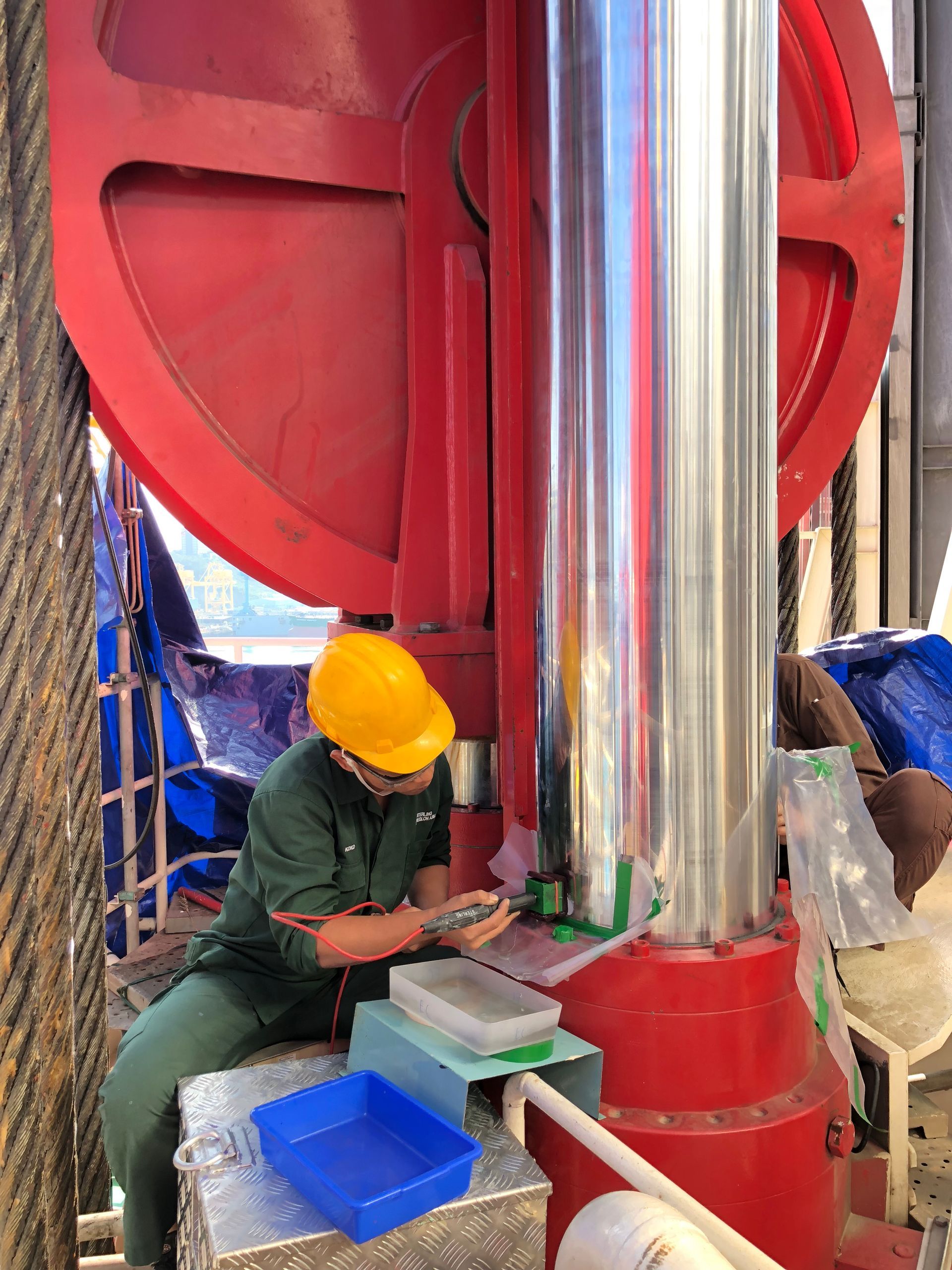
4. Brush Plate. The end bell was mounted on a rotating fixture and the worn bore was plated by hand, building up metal in controlled layers. Because only the bore is treated, the rest of the casting is unaffected. The process runs at low temperature, which avoids the heat distortion risks of welding or thermal spray.


5. Check and finish. The bore was measured repeatedly during and after plating, and the target size range was marked on the part. The surface was then finished to the required dimension and fit, ready for the bearing.


Why Brush Plating Suited This Job

  • Low heat. There is a much lower risk of distorting a large casting.
  • Targeted. Only the damaged bore is repaired.
  • Controlled. Metal is built up gradually, which allows the bore to be brought to size and checked at each stage.
  • Faster than waiting for a replacement. Repair can often be completed in a fraction of the time and cost of sourcing a new end bell, especially for older or special-order motors.
  • Flexible. Depending on the size and location of the part, work can be done in the workshop or, in some cases, on-site.


When Replacement Is Still the Right Call

Brush Plating is not suitable for every end bell. Replacement should be considered when:

  • The casting is cracked or structurally damaged
  • Wear or corrosion is too deep for a surface build-up to be practical
  • The base material is not sound enough to support a bonded layer

A proper assessment will separate repairable parts from those that are not, ideally before a replacement is ordered.


Getting the Most from a Repair

A restored bore only lasts if the cause of the damage is dealt with. Consider checking:

  • Fit and installation practice, using proper heating and pressing methods
  • Lubrication, since both too much and too little can cause overheating
  • Alignment and balance, which affect the loads on the bearing and its seat
  • Storage and environment, to keep moisture and contamination away from machined surfaces

It is also a good habit to measure the bore every time a bearing is changed. It takes minutes and catches wear early.


Have an End Bell with a Worn or Corroded Bore?

If you have a motor end bell or bearing housing with a worn, corroded, or pitted bore, send us:

  • Clear photos of the damage, with a ruler or scale in the frame
  • The measured size and the specified size of the bore
  • The motor type, size, and application


By wilson.wang • November 13, 2026
How Storage and Handling Damage Anti-Galling Coatings
By wilson.wang • November 11, 2026
A Common, Overlooked Repair
By wilson.wang • November 4, 2026
Plating Thickness and Anti-Galling Performance
By wilson.wang • October 30, 2026
What Should You Do?
By wilson.wang • October 28, 2026
And Can the Damage Be Repaired?
By wilson.wang • October 21, 2026
A Troubleshooting Guide
By wilson.wang • October 19, 2026
Proven Strategies to Repair, Adapt, or Source Hard-to-Find Components
By wilson.wang • October 13, 2026
Sterling Brush Plating Solutions
By wilson.wang • October 8, 2026
A Strategic Location

By wilson.wang • October 6, 2026
Warning Signs to Watch Out For
By wilson.wang • October 1, 2026
Which Is Right for Your Operation?
By wilson.wang • September 29, 2026
Lessons the Industry Keeps Relearning About Galling 
By wilson.wang • September 23, 2026
Approved, Repaired, Back in Service
By wilson.wang • September 21, 2026
A Realistic Timeline Breakdown
By wilson.wang • September 16, 2026
And Which Are Repairable?
By wilson.wang • September 14, 2026
Step-By-Step Journey on Component Repair
By wilson.wang • September 11, 2026
How We Support Overseas Repair Jobs 
By wilson.wang • September 7, 2026
How Rising Costs and Global Uncertainty Affect your Decision?
By wilson.wang • September 3, 2026
How In-Situ Repairs are critical for the Aerospace Industry
By wilson.wang • September 1, 2026
Causes of Corrosion Pitting and How it can be Repaired?
By wilson.wang • August 26, 2026
Bringing Brush Plating Capability In-House
By wilson.wang • August 24, 2026
Repair Over Replace
By wilson.wang • August 17, 2026
How Brush Plating Adapts to Different Applications
By wilson.wang • August 13, 2026
5 Signs Your OCTG Connections Need Anti-Galling Protection
By wilson.wang • August 11, 2026
What the Invoice Doesn't Show You 
By wilson.wang • August 5, 2026
Brush Plating Technology - Approved by Lloyd's Register and ABS
By wilson.wang • August 3, 2026
Time-Lapse Video of Brush Plating Repair on Bearing Cap
By wilson.wang • July 30, 2026
Here's the Difference.....
By wilson.wang • July 27, 2026
And How to Prevent Them
By wilson.wang • July 23, 2026
A Simple Explanation of the Technology Behind Our Repairs 
By wilson.wang • July 14, 2026
Brush Plating Repair on Gearbox Casing
By wilson.wang • July 8, 2026
What a Worn Shaft Really Costs You....
By wilson.wang • July 6, 2026
Brush Plating Training
By wilson.wang • July 3, 2026
Smarter Repair, Longer Equipment Life
By wilson.wang • June 29, 2026
Prevent Downtime & Extend Equipment Life
By wilson.wang • June 24, 2026
Completed Within One Day Using Sterling Brush Plating Technology
By wilson.wang • June 22, 2026
Copper Plating and its Anti-Galling Properties
By wilson.wang • June 17, 2026
Sustainability via Repairing
By wilson.wang • June 11, 2026
Restoring Performance with Brush Plating Technology 
By wilson.wang • June 8, 2026
Most engineers ask the wrong question about Hard Chrome vs Brush Plating
By wilson.wang • June 3, 2026
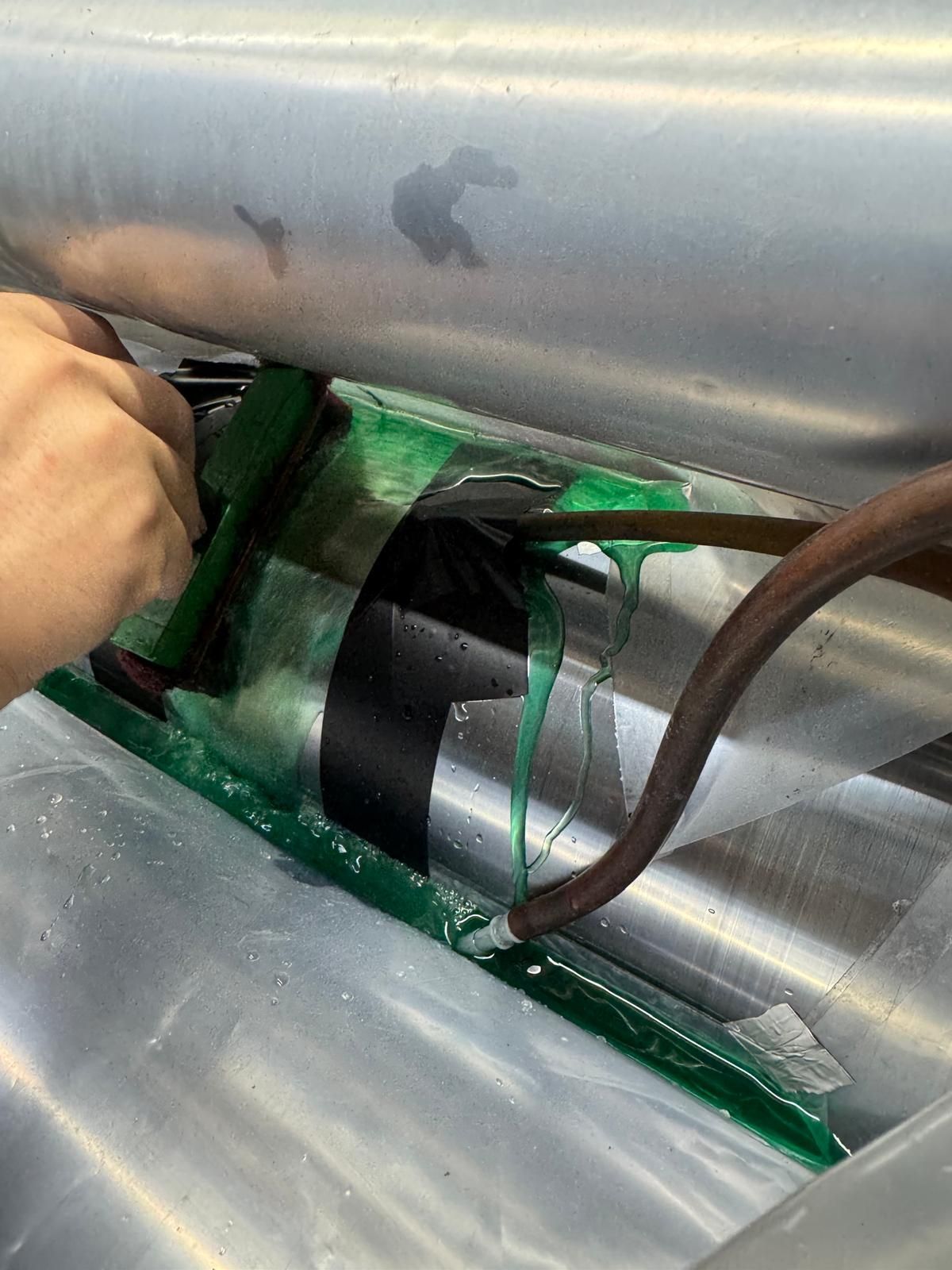
In the printing industry, quality is everything. Whether producing packaging materials, labels, newspapers, or commercial print products, even the smallest defect can affect the final output. One commonly overlooked issue that can significantly impact printing performance is damage to printing cylinders, particularly corrosion and scorelines . While these issues may initially seem minor, they can gradually lead to poor print quality, increased material waste, production downtime, and higher operational costs . Understanding how corrosion and scorelines affect printing performance is the first step towards preventing bigger problems. What Causes Corrosion and Scorelines on Printing Cylinders? Printing cylinders are constantly exposed to demanding operating conditions. Overtime, wear and environmental factors can damage the cylinder surface. Common Causes of Corrosion: Moisture exposure Chemical reactions from inks and cleaning agents Humidity and poor storage conditions Breakdown of protective surfaces over time Common Causes of Scorelines: Foreign particles trapped during operation Improper handling or cleaning Mechanical wear and friction Contact damage from surrounding components These problems often develop gradually and may go unnoticed until print quality begins to suffer. How Corrosion Affects Printing Quality Corrosion creates localized pitting and uneven surfaces on printing cylinders. When the cylinder surface is no longer smooth, several problems may occur: 1. Uneven Ink Transfer Damaged surfaces prevent proper ink distribution, leading to: ❌ Patchy or inconsistent print quality ❌ Uneven color density ❌ Poor image clarity 2. Defects in Finished Products Corrosion pits can create visible imperfections such as: ❌ Marks or blemishes on printed materials ❌ Distorted print patterns ❌ Reduced product quality This becomes especially critical in industries where visual quality is essential, such as packaging and branding. 3. Increased Material Waste Poor print consistency often means: ❌ Higher rejection rates ❌ More wasted material ❌ Increased production costs Overtime, even small defects can significantly affect profitability. How Scorelines Affect Printing Performance Scorelines are grooves or scratches on the cylinder surface that directly affect precision. Common Problems Caused by Scorelines: 1. Print Distortion Scorelines can interrupt smooth cylinder contact, causing: ❌ Streak marks ❌ Blurred sections ❌ Inconsistent printing results 2. Reduced Printing Accuracy In high-precision printing applications, even slight surface damage can affect registration and alignment. The result? ❌ Lower print consistency ❌ Customer complaints ❌ Reduced product confidence 3. Unexpected Downtime If left untreated, damaged cylinders may eventually require urgent repairs or replacement interrupting production schedules. For printing companies, downtime means: ❌ Delayed deliveries ❌ Missed production targets ❌ Increased operational pressure Can Damaged Printing Cylinders Be Repaired? The good news is YES . In many cases, corroded or scored printing cylinders can be restored instead of replaced. At Sterling Impreglon Asia, we utilize our proprietary Brush Plating Technology to repair damaged cylinder surfaces with precision. The process allows us to: ✔ Restore corrosion pitting and scorelines ✔ Rebuild damaged surfaces to required dimensions ✔ Improve cylinder functionality and surface consistency ✔ Extend the lifespan of expensive mechanical components Most importantly, repair often proves to be faster and more cost-effective than replacement . Why Early Repair Matters Addressing corrosion and scorelines early helps printing companies: ✔ Maintain consistent print quality ✔ Reduce material wastage ✔ Avoid costly downtime ✔ Extend equipment lifespan ✔ Improve production efficiency A small repair today can prevent a much larger problem tomorrow. Final Thought Corrosion and scorelines may start as small imperfections but their impact on printing quality can be significant. For printing companies focused on quality, efficiency, and operational reliability, maintaining cylinder condition is critical. At Sterling Impreglon Asia, we help customers restore damaged printing cylinders with precision, durability, and minimal disruption , ensuring production stays smooth and print quality remains consistent. 👉 Facing corrosion or scorelines on your printing cylinders? Contact Sterling Impreglon Asia today to learn how our repair solutions can help restore performance and reduce costly downtime.

By wilson.wang • May 29, 2026
Should the repair be done onboard/on-site or sent to a workshop? 
By wilson.wang • May 25, 2026
Repairing Damaged Hydraulic Rods in Days
By wilson.wang • May 20, 2026
Why Copper Adhesion is Critical for Connections?
By wilson.wang • May 18, 2026
The Most Common Issues Found on Offshore Machineries
By wilson.wang • May 12, 2026
Galling - A Serious Problem for Oil Tools and Accessories?
By wilson.wang • May 7, 2026
Brush Plating for the Marine Industry
More Posts