Why We Manufacture Our Own Plating Chemicals In-House

wilson.wang • October 13, 2026

Sterling Brush Plating Solutions

In Brush Plating, the equipment gets the attention, but the plating solution does much of the real work. It is the material that actually becomes the new surface on your components. If the solution varies from batch to batch, the plating quality will too.


That is why, since the inception, Sterling has produced its own proprietary Brush Plating solutions in-house rather than buying them from an outside supplier. Here is what that means for quality, and why it matters to you.


Why the Chemistry Matters

A plating solution determines how well metal bonds to the surface, how evenly it deposits, and how quickly a job can be completed. Small differences in formulation or concentration can show up as poor adhesion, uneven deposits, or repairs that do not last.


For critical components, such as marine shafts, aerospace parts, or oil and gas connections, those differences are not acceptable. Consistency is the point.


What Making It In-House Gives Us

1. Consistency, batch after batch. When we control the formulation and production, every batch is made to the same standard. Our technicians, and the customers who use our solutions, can rely on the same behaviour from one job to the next.


2. Quality checks at every batch. Because production happens under our own roof, each batch goes through strict quality checks before it is used. We are not relying on a third party's testing, and we are not discovering a problem after the solution has already reached a job.


3. High metal concentration and fast deposition. Our formulations are designed with a high metal concentration and a fast rate of deposition. In practice, this helps our plating work move efficiently without compromising the quality of the result.


4. A reliable, uninterrupted supply. Owning the supply chain for our chemicals reduces our exposure to outside shortages, delays, or changes in a supplier's product. When a customer needs our service or a solution, we are not waiting on someone else's production schedule.


5. Solutions built around real jobs. Our chemistry is developed alongside our repair and anti-galling work, so it is shaped by what we see on actual components in the field. We offer a wide range of solution types to suit different applications, and we can refine formulations based on what works in practice.


Why This Matters to You

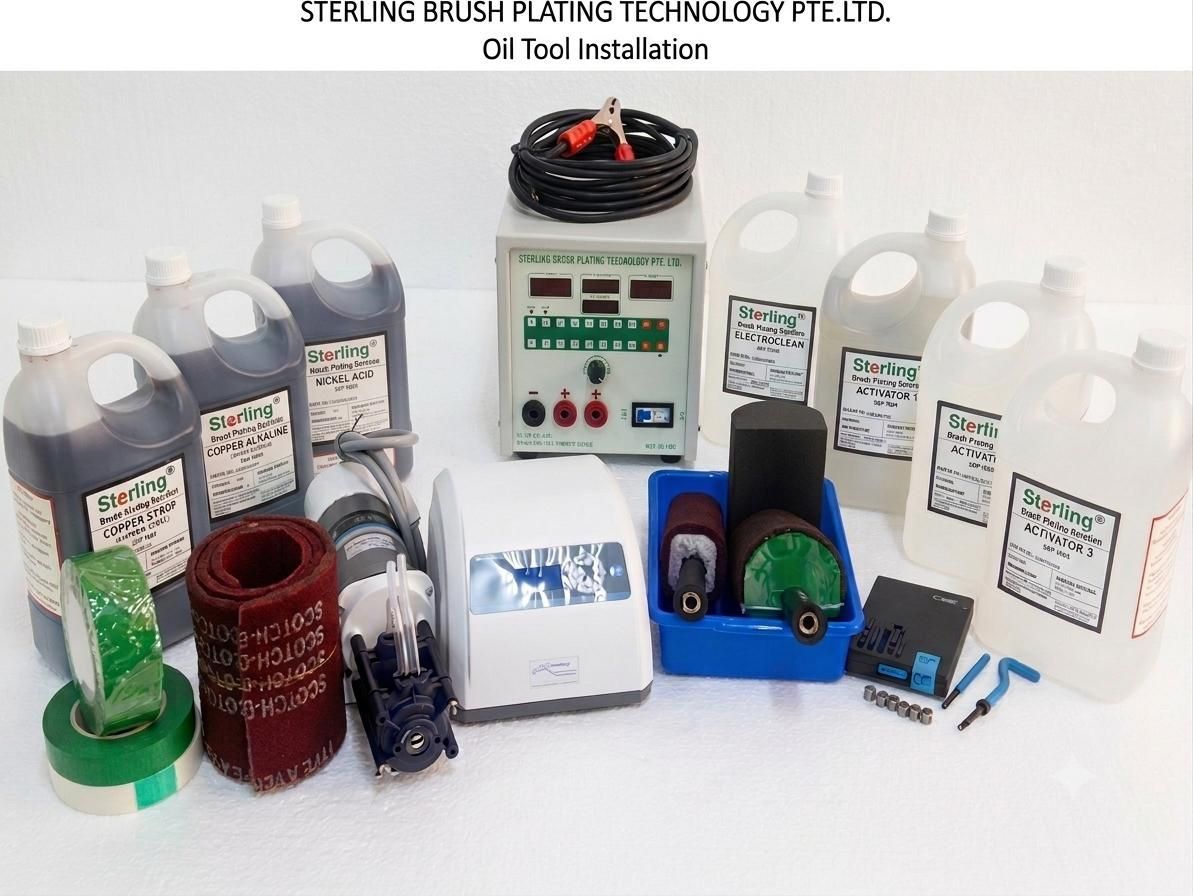
Whether you send us a component for plating or use our solutions in your own operation through the STERLING SET, you are relying on the same thing: a plating solution you can trust to perform the same way every time.


That reliability supports what customers care about most: strong adhesion, accurate dimensional restoration, and repairs that stay in service.


Questions About Our Solutions?

If you would like to know more about our plating solutions, or how they fit your applications, our team is happy to help.


Get in touch with Sterling Impreglon Asia to find out more.


By wilson.wang • October 8, 2026
A Strategic Location
By wilson.wang • October 6, 2026
Warning Signs to Watch Out For
By wilson.wang • October 1, 2026
Which Is Right for Your Operation?
By wilson.wang • September 29, 2026
Lessons the Industry Keeps Relearning About Galling 
By wilson.wang • September 23, 2026
Approved, Repaired, Back in Service
By wilson.wang • September 21, 2026
A Realistic Timeline Breakdown
By wilson.wang • September 16, 2026
And Which Are Repairable?
By wilson.wang • September 14, 2026
Step-By-Step Journey on Component Repair
By wilson.wang • September 11, 2026
How We Support Overseas Repair Jobs 
By wilson.wang • September 7, 2026
How Rising Costs and Global Uncertainty Affect your Decision?
By wilson.wang • September 3, 2026
How In-Situ Repairs are critical for the Aerospace Industry
By wilson.wang • September 1, 2026
Causes of Corrosion Pitting and How it can be Repaired?
By wilson.wang • August 26, 2026
Bringing Brush Plating Capability In-House
By wilson.wang • August 24, 2026
Repair Over Replace
By wilson.wang • August 17, 2026
How Brush Plating Adapts to Different Applications
By wilson.wang • August 13, 2026
5 Signs Your OCTG Connections Need Anti-Galling Protection
By wilson.wang • August 11, 2026
What the Invoice Doesn't Show You 
By wilson.wang • August 5, 2026
Brush Plating Technology - Approved by Lloyd's Register and ABS
By wilson.wang • August 3, 2026
Time-Lapse Video of Brush Plating Repair on Bearing Cap
By wilson.wang • July 30, 2026
Here's the Difference.....
By wilson.wang • July 27, 2026
And How to Prevent Them
By wilson.wang • July 23, 2026
A Simple Explanation of the Technology Behind Our Repairs 
By wilson.wang • July 14, 2026
Brush Plating Repair on Gearbox Casing
By wilson.wang • July 8, 2026
What a Worn Shaft Really Costs You....
By wilson.wang • July 6, 2026
Brush Plating Training
By wilson.wang • July 3, 2026
Smarter Repair, Longer Equipment Life
By wilson.wang • June 29, 2026
Prevent Downtime & Extend Equipment Life
By wilson.wang • June 24, 2026
Completed Within One Day Using Sterling Brush Plating Technology
By wilson.wang • June 22, 2026
Copper Plating and its Anti-Galling Properties
By wilson.wang • June 17, 2026
Sustainability via Repairing
By wilson.wang • June 11, 2026
Restoring Performance with Brush Plating Technology 
By wilson.wang • June 8, 2026
Most engineers ask the wrong question about Hard Chrome vs Brush Plating
By wilson.wang • June 3, 2026
In the printing industry, quality is everything. Whether producing packaging materials, labels, newspapers, or commercial print products, even the smallest defect can affect the final output. One commonly overlooked issue that can significantly impact printing performance is damage to printing cylinders, particularly corrosion and scorelines . While these issues may initially seem minor, they can gradually lead to poor print quality, increased material waste, production downtime, and higher operational costs . Understanding how corrosion and scorelines affect printing performance is the first step towards preventing bigger problems. What Causes Corrosion and Scorelines on Printing Cylinders? Printing cylinders are constantly exposed to demanding operating conditions. Overtime, wear and environmental factors can damage the cylinder surface. Common Causes of Corrosion: Moisture exposure Chemical reactions from inks and cleaning agents Humidity and poor storage conditions Breakdown of protective surfaces over time Common Causes of Scorelines: Foreign particles trapped during operation Improper handling or cleaning Mechanical wear and friction Contact damage from surrounding components These problems often develop gradually and may go unnoticed until print quality begins to suffer. How Corrosion Affects Printing Quality Corrosion creates localized pitting and uneven surfaces on printing cylinders. When the cylinder surface is no longer smooth, several problems may occur: 1. Uneven Ink Transfer Damaged surfaces prevent proper ink distribution, leading to: ❌ Patchy or inconsistent print quality ❌ Uneven color density ❌ Poor image clarity 2. Defects in Finished Products Corrosion pits can create visible imperfections such as: ❌ Marks or blemishes on printed materials ❌ Distorted print patterns ❌ Reduced product quality This becomes especially critical in industries where visual quality is essential, such as packaging and branding. 3. Increased Material Waste Poor print consistency often means: ❌ Higher rejection rates ❌ More wasted material ❌ Increased production costs Overtime, even small defects can significantly affect profitability. How Scorelines Affect Printing Performance Scorelines are grooves or scratches on the cylinder surface that directly affect precision. Common Problems Caused by Scorelines: 1. Print Distortion Scorelines can interrupt smooth cylinder contact, causing: ❌ Streak marks ❌ Blurred sections ❌ Inconsistent printing results 2. Reduced Printing Accuracy In high-precision printing applications, even slight surface damage can affect registration and alignment. The result? ❌ Lower print consistency ❌ Customer complaints ❌ Reduced product confidence 3. Unexpected Downtime If left untreated, damaged cylinders may eventually require urgent repairs or replacement interrupting production schedules. For printing companies, downtime means: ❌ Delayed deliveries ❌ Missed production targets ❌ Increased operational pressure Can Damaged Printing Cylinders Be Repaired? The good news is YES . In many cases, corroded or scored printing cylinders can be restored instead of replaced. At Sterling Impreglon Asia, we utilize our proprietary Brush Plating Technology to repair damaged cylinder surfaces with precision. The process allows us to: ✔ Restore corrosion pitting and scorelines ✔ Rebuild damaged surfaces to required dimensions ✔ Improve cylinder functionality and surface consistency ✔ Extend the lifespan of expensive mechanical components Most importantly, repair often proves to be faster and more cost-effective than replacement . Why Early Repair Matters Addressing corrosion and scorelines early helps printing companies: ✔ Maintain consistent print quality ✔ Reduce material wastage ✔ Avoid costly downtime ✔ Extend equipment lifespan ✔ Improve production efficiency A small repair today can prevent a much larger problem tomorrow. Final Thought Corrosion and scorelines may start as small imperfections but their impact on printing quality can be significant. For printing companies focused on quality, efficiency, and operational reliability, maintaining cylinder condition is critical. At Sterling Impreglon Asia, we help customers restore damaged printing cylinders with precision, durability, and minimal disruption , ensuring production stays smooth and print quality remains consistent. 👉 Facing corrosion or scorelines on your printing cylinders? Contact Sterling Impreglon Asia today to learn how our repair solutions can help restore performance and reduce costly downtime.


By wilson.wang • May 29, 2026
Should the repair be done onboard/on-site or sent to a workshop? 
By wilson.wang • May 25, 2026
Repairing Damaged Hydraulic Rods in Days
By wilson.wang • May 20, 2026
Why Copper Adhesion is Critical for Connections?
By wilson.wang • May 18, 2026
The Most Common Issues Found on Offshore Machineries
By wilson.wang • May 12, 2026
Galling - A Serious Problem for Oil Tools and Accessories?
By wilson.wang • May 7, 2026
Brush Plating for the Marine Industry
By wilson.wang • May 4, 2026
For Anti-Galling Copper Plating Success
By wilson.wang • April 30, 2026
Repair vs Replace?
By wilson.wang • April 28, 2026
And How to Avoid Them
By wilson.wang • April 23, 2026
Here is the Most Effective Repair Method
By wilson.wang • April 21, 2026
Understanding Galling in OCTG Connections and its Solutions
By wilson.wang • April 17, 2026
Why On-Site Repair Technology is the Next Big Shift in Industrial Maintenance
By wilson.wang • April 14, 2026
Copper Brush Plating - The Preferred Choice
By wilson.wang • April 8, 2026
Real-Life Hydraulic Shaft Repair
More Posts