Premium vs. Non-Premium Connections

wilson.wang • November 25, 2026

Where Does Anti-Galling Plating Matter Most?


Every threaded connection in a well can gall. But the consequences are not equal. A damaged thread on a standard connection may mean a rejected joint and a replacement. A damaged seal surface on a premium connection in a deep, high-pressure, or sour well can mean a leak, a failed barrier, and a very expensive intervention.


This article explains the difference between premium and non-premium connections, where galling risk sits in each, and where anti-galling plating delivers the most value.


Premium and Non-Premium Connections: A Quick Overview


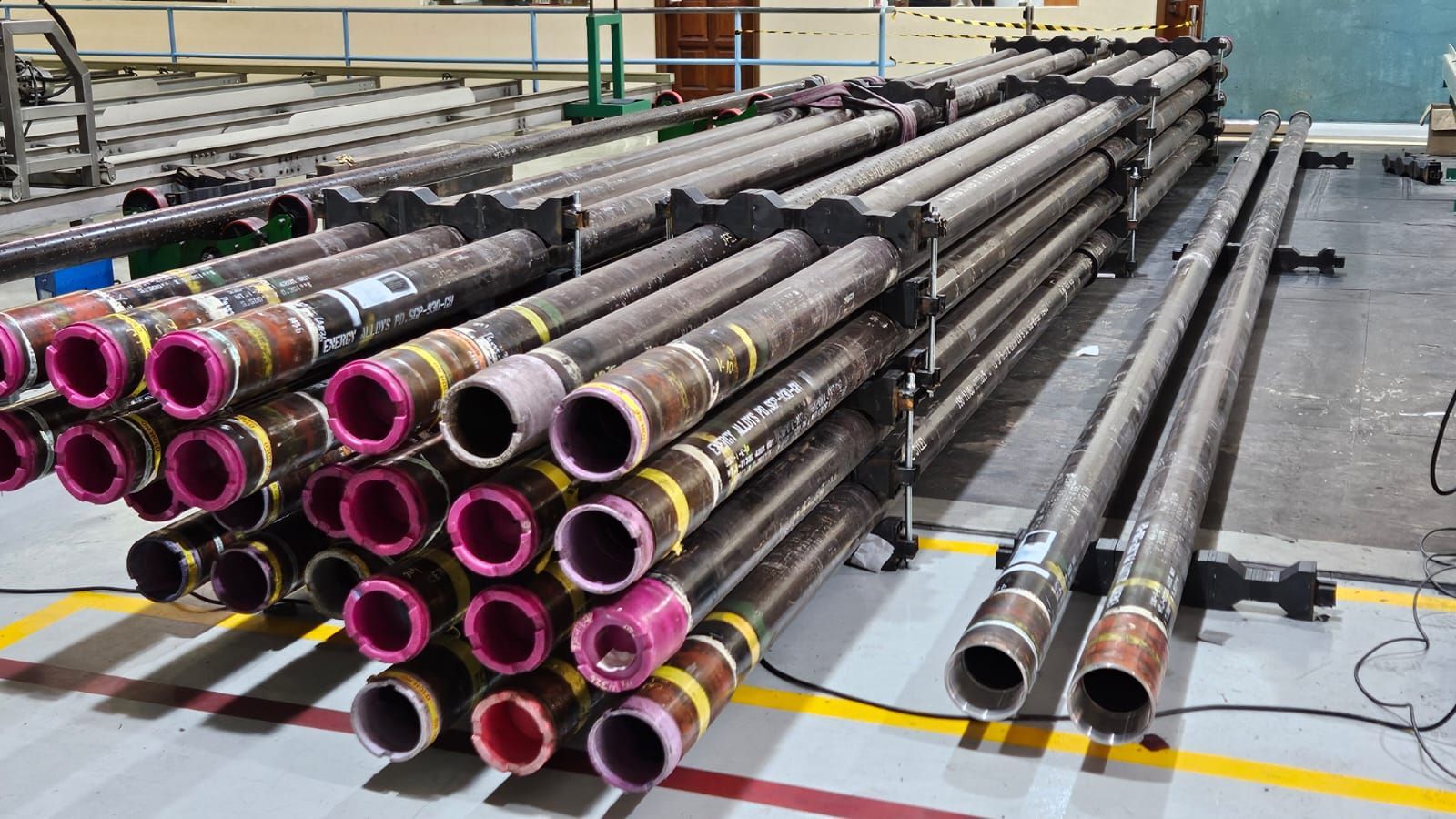
Non-premium (API-type) connections are built to published API standards. Round-thread and buttress connections are common examples. They seal mainly through the interaction of the threads and the thread compound that fills the gaps between them. They are widely used, cost-effective, and well understood.


Premium connections are proprietary designs, usually made under license from a connection owner. They typically add features such as:

  • A metal-to-metal seal, where two precisely machined surfaces press together to create a gas-tight barrier
  • A torque shoulder, which gives a positive stop during make-up
  • Tighter machining tolerances and more complex thread forms


These features make premium connections suitable for demanding wells: high pressure, high temperature, deep or deviated wells, sour service, and gas production.


Why Galling Is More Critical on Premium Connections

On a standard connection, galling mainly damages the threads. On a premium connection, galling can damage the seal surface and shoulder as well. This matters because a metal-to-metal seal relies on a smooth, undamaged surface. Even a small scratch or smeared patch can create a leak path.


Several factors raise the stakes:

  • High contact pressure. Metal-to-metal seals work by pressing surfaces together hard, which is exactly the condition that promotes galling.
  • Tight tolerances. There is little room for damaged or built-up material.
  • Difficult materials. Premium connections are often used on corrosion-resistant alloys (CRAs), which are particularly prone to galling.
  • Repeated make-up. Tubing and completion strings may be run, pulled, and re-run several times.
  • High cost of failure. A leaking connection deep in a well can mean lost production, rig time, and workover costs far greater than the cost of the connection itself.


 What About Non-Premium Connections?

Non-premium connections still benefit from good anti-galling protection, especially when:

  • They are made from CRAs or high-strength steels
  • They are re-used across many jobs
  • They are run in harsh conditions or under time pressure
  • A history of galling has already been seen


Value: A Small Cost Against a Big Risk

Plating is a small part of the total cost of a connection and an even smaller part of the cost of a well. The comparison that matters is not the plating cost against zero. It is the plating cost against:

  • A rejected connection or a scrapped joint
  • Rework, re-cutting, or re-plating
  • Delays while replacement material is found
  • Rig time lost to a connection problem
  • A leak path or workover in a producing well

The higher the cost of failure, the stronger the case for protecting the connection properly, and for making sure that protection arrives on the rig undamaged.


Don't Forget the Basics

Even the best plating can be undermined by what happens around it. Whether premium or non-premium, performance depends on:

  • The right specification. Follow the licensor or OEM requirements for the connection.
  • Proper thickness and adhesion. Too thin wears through, and too thick or poorly bonded can lift.
  • Good storage and handling. Protect threads from rust, contamination, and knocks before running.
  • Correct make-up practice. Clean threads, proper alignment, approved compound, and controlled speed and torque.
  • A qualified plating process. Consistency matters as much as the coating itself.


The Takeaway

Galling is a risk on every threaded connection, but the cost of failure is not the same everywhere. Premium connections, difficult materials, and demanding wells carry the highest risk, so that is where anti-galling plating delivers the most value. The goal is simple: protect the connection where it matters most, follow the specification, and make sure that protection reaches the rig intact.


Need Support With Anti-Galling Plating?

If you want to discuss plating or re-plating for premium or non-premium connections, or you are unsure what your connections call for, our team can help.


Get in touch with Sterling Impreglon Asia to find out more.


Situation Why Plating Matters More
Premium Connections with Metal-to-Metal Seals Seal surfaces must stay undamaged to remain gas-tight
CRA materials (e.g. 13Cr, duplex, and higher alloys) These materials gall easily, so surface protection is essential
High-pressure, high-temperature, and sour wells Failure is costly and difficult to repair
Gas wells Leak-tight performance is critical
Offshore and deepwater operations Rig time is expensive, so reruns and rejects hurt more
Strings run multiple times Plating must withstand repeated make-up and break-out
Accessories and special-purpose items (crossovers, subs, pup joints, and tools) Often low-volume, high-value, and made from demanding materials
By wilson.wang • November 23, 2026
Brush Plating Repair on a Bearing Housing
By wilson.wang • November 18, 2026
How Anti-Galling Coatings Work and What the Alternatives Are
By wilson.wang • November 16, 2026
A Repair Instead of a Replacement
By wilson.wang • November 13, 2026
How Storage and Handling Damage Anti-Galling Coatings
By wilson.wang • November 11, 2026
A Common, Overlooked Repair
By wilson.wang • November 4, 2026
Plating Thickness and Anti-Galling Performance
By wilson.wang • October 30, 2026
What Should You Do?
By wilson.wang • October 28, 2026
And Can the Damage Be Repaired?
By wilson.wang • October 21, 2026
A Troubleshooting Guide
By wilson.wang • October 19, 2026
Proven Strategies to Repair, Adapt, or Source Hard-to-Find Components
By wilson.wang • October 13, 2026
Sterling Brush Plating Solutions
By wilson.wang • October 8, 2026
A Strategic Location
By wilson.wang • October 6, 2026
Warning Signs to Watch Out For
By wilson.wang • October 1, 2026
Which Is Right for Your Operation?
By wilson.wang • September 29, 2026
Lessons the Industry Keeps Relearning About Galling 
By wilson.wang • September 23, 2026
Approved, Repaired, Back in Service
By wilson.wang • September 21, 2026
A Realistic Timeline Breakdown
By wilson.wang • September 16, 2026
And Which Are Repairable?
By wilson.wang • September 14, 2026
Step-By-Step Journey on Component Repair
By wilson.wang • September 11, 2026
How We Support Overseas Repair Jobs 
By wilson.wang • September 7, 2026
How Rising Costs and Global Uncertainty Affect your Decision?
By wilson.wang • September 3, 2026
How In-Situ Repairs are critical for the Aerospace Industry
By wilson.wang • September 1, 2026
Causes of Corrosion Pitting and How it can be Repaired?
By wilson.wang • August 26, 2026
Bringing Brush Plating Capability In-House
By wilson.wang • August 24, 2026
Repair Over Replace
By wilson.wang • August 17, 2026
How Brush Plating Adapts to Different Applications
By wilson.wang • August 13, 2026
5 Signs Your OCTG Connections Need Anti-Galling Protection
By wilson.wang • August 11, 2026
What the Invoice Doesn't Show You 
By wilson.wang • August 5, 2026
Brush Plating Technology - Approved by Lloyd's Register and ABS
By wilson.wang • August 3, 2026
Time-Lapse Video of Brush Plating Repair on Bearing Cap
By wilson.wang • July 30, 2026
Here's the Difference.....
By wilson.wang • July 27, 2026
And How to Prevent Them
By wilson.wang • July 23, 2026
A Simple Explanation of the Technology Behind Our Repairs 
By wilson.wang • July 14, 2026
Brush Plating Repair on Gearbox Casing
By wilson.wang • July 8, 2026
What a Worn Shaft Really Costs You....
By wilson.wang • July 6, 2026
Brush Plating Training
By wilson.wang • July 3, 2026
Smarter Repair, Longer Equipment Life
By wilson.wang • June 29, 2026
Prevent Downtime & Extend Equipment Life
By wilson.wang • June 24, 2026
Completed Within One Day Using Sterling Brush Plating Technology
By wilson.wang • June 22, 2026
Copper Plating and its Anti-Galling Properties
By wilson.wang • June 17, 2026
Sustainability via Repairing
By wilson.wang • June 11, 2026
Restoring Performance with Brush Plating Technology 
By wilson.wang • June 8, 2026
Most engineers ask the wrong question about Hard Chrome vs Brush Plating
By wilson.wang • June 3, 2026
In the printing industry, quality is everything. Whether producing packaging materials, labels, newspapers, or commercial print products, even the smallest defect can affect the final output. One commonly overlooked issue that can significantly impact printing performance is damage to printing cylinders, particularly corrosion and scorelines . While these issues may initially seem minor, they can gradually lead to poor print quality, increased material waste, production downtime, and higher operational costs . Understanding how corrosion and scorelines affect printing performance is the first step towards preventing bigger problems. What Causes Corrosion and Scorelines on Printing Cylinders? Printing cylinders are constantly exposed to demanding operating conditions. Overtime, wear and environmental factors can damage the cylinder surface. Common Causes of Corrosion: Moisture exposure Chemical reactions from inks and cleaning agents Humidity and poor storage conditions Breakdown of protective surfaces over time Common Causes of Scorelines: Foreign particles trapped during operation Improper handling or cleaning Mechanical wear and friction Contact damage from surrounding components These problems often develop gradually and may go unnoticed until print quality begins to suffer. How Corrosion Affects Printing Quality Corrosion creates localized pitting and uneven surfaces on printing cylinders. When the cylinder surface is no longer smooth, several problems may occur: 1. Uneven Ink Transfer Damaged surfaces prevent proper ink distribution, leading to: ❌ Patchy or inconsistent print quality ❌ Uneven color density ❌ Poor image clarity 2. Defects in Finished Products Corrosion pits can create visible imperfections such as: ❌ Marks or blemishes on printed materials ❌ Distorted print patterns ❌ Reduced product quality This becomes especially critical in industries where visual quality is essential, such as packaging and branding. 3. Increased Material Waste Poor print consistency often means: ❌ Higher rejection rates ❌ More wasted material ❌ Increased production costs Overtime, even small defects can significantly affect profitability. How Scorelines Affect Printing Performance Scorelines are grooves or scratches on the cylinder surface that directly affect precision. Common Problems Caused by Scorelines: 1. Print Distortion Scorelines can interrupt smooth cylinder contact, causing: ❌ Streak marks ❌ Blurred sections ❌ Inconsistent printing results 2. Reduced Printing Accuracy In high-precision printing applications, even slight surface damage can affect registration and alignment. The result? ❌ Lower print consistency ❌ Customer complaints ❌ Reduced product confidence 3. Unexpected Downtime If left untreated, damaged cylinders may eventually require urgent repairs or replacement interrupting production schedules. For printing companies, downtime means: ❌ Delayed deliveries ❌ Missed production targets ❌ Increased operational pressure Can Damaged Printing Cylinders Be Repaired? The good news is YES . In many cases, corroded or scored printing cylinders can be restored instead of replaced. At Sterling Impreglon Asia, we utilize our proprietary Brush Plating Technology to repair damaged cylinder surfaces with precision. The process allows us to: ✔ Restore corrosion pitting and scorelines ✔ Rebuild damaged surfaces to required dimensions ✔ Improve cylinder functionality and surface consistency ✔ Extend the lifespan of expensive mechanical components Most importantly, repair often proves to be faster and more cost-effective than replacement . Why Early Repair Matters Addressing corrosion and scorelines early helps printing companies: ✔ Maintain consistent print quality ✔ Reduce material wastage ✔ Avoid costly downtime ✔ Extend equipment lifespan ✔ Improve production efficiency A small repair today can prevent a much larger problem tomorrow. Final Thought Corrosion and scorelines may start as small imperfections but their impact on printing quality can be significant. For printing companies focused on quality, efficiency, and operational reliability, maintaining cylinder condition is critical. At Sterling Impreglon Asia, we help customers restore damaged printing cylinders with precision, durability, and minimal disruption , ensuring production stays smooth and print quality remains consistent. 👉 Facing corrosion or scorelines on your printing cylinders? Contact Sterling Impreglon Asia today to learn how our repair solutions can help restore performance and reduce costly downtime.
By wilson.wang • May 29, 2026
Should the repair be done onboard/on-site or sent to a workshop? 
By wilson.wang • May 25, 2026
Repairing Damaged Hydraulic Rods in Days
By wilson.wang • May 20, 2026
Why Copper Adhesion is Critical for Connections?
More Posts